

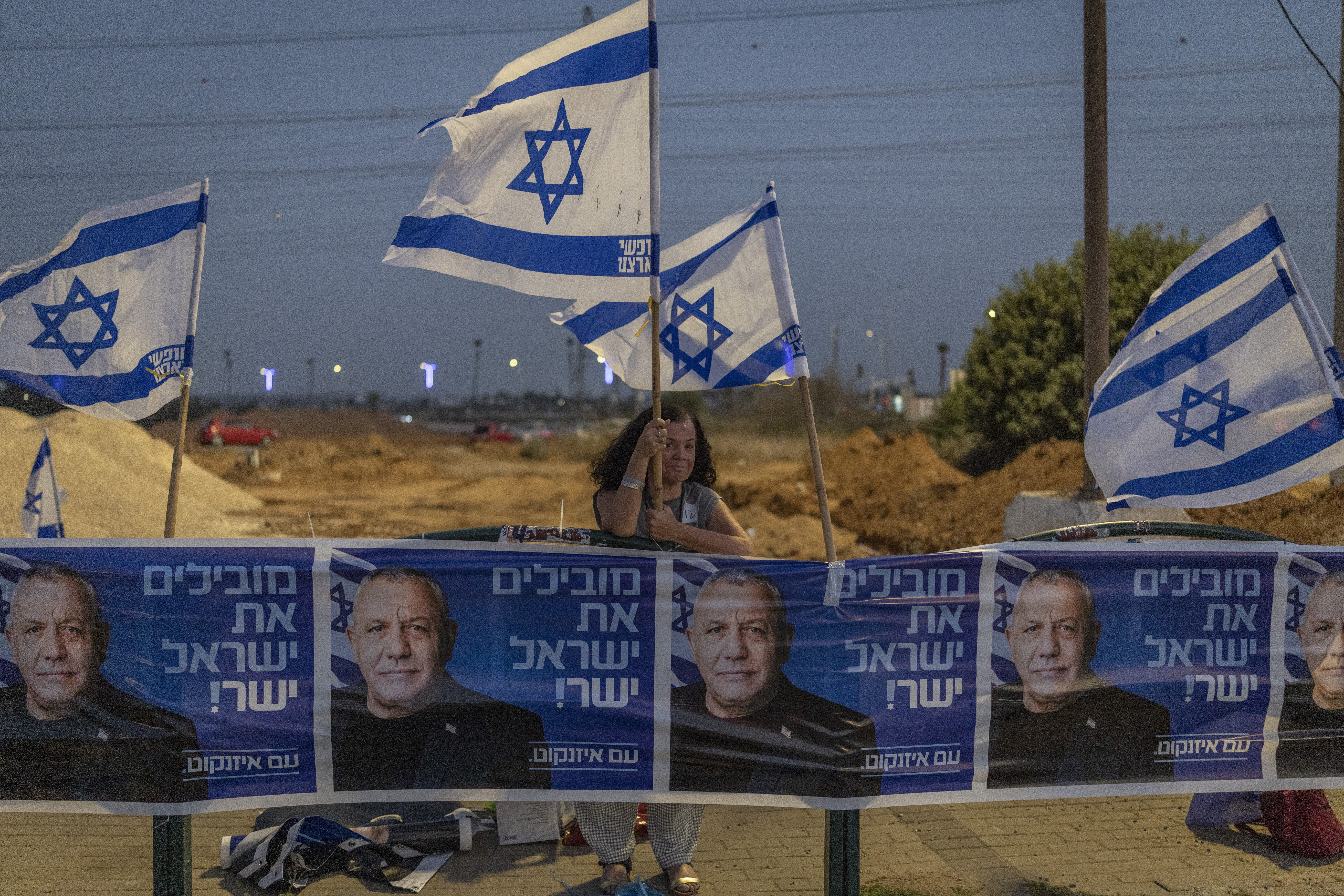



Israel is heading into consequential elections on Oct. 27, 2026. Voters will decide the composition of the next Knesset after four turbulent years marked by the October 7 massacre and subsequent regional wars, growing international pressure over the immense and continued death and destruction in Gaza, corruption charges and international arrest warrants on Prime Minister Benjamin Netanyahu, and escalating settler violence in the West Bank. Netanyahu and his Likud party face a crowded field of opposition parties, all of which vary significantly on major issues such as extension of the military draft to Haredi citizens, the establishment of an independent investigative commission into the October 7 attacks, judicial reform, and West Bank annexation. With 38 parties competing for 120 seats, the election hinges not only on the popular vote and Knesset seat makeup but also on whether the major parties can assemble a unified governing coalition. This visual guide breaks down the major candidates, explains Israel’s unicameral parliamentary system, and outlines projected seat distributions. An accompanying party alignment guide and issue-by-issue scorecard offer insight into where parties stand on the most important issues in Israel and to U.S. policy, including Palestinian statehood, West Bank settlements and annexation, judicial reform, and continued occupation of Gaza.
Jump to: Context · Candidates · How the vote works · Likely results · Party stances · All parties
Turbulent times
The term of the government under Prime Minister Benjamin Netanyahu, the farthest right in Israel’s history, is ending. The past four years, one of the country’s most turbulent periods in decades, have included:
-
- The Oct. 7 massacre and subsequent conflicts.
-
- Mounting international pressure against Israel for alleged war crimes committed by the Israel Defense Forces in Gaza.
-
- Extension of the military draft to Haredi citizens.
-
- Attempts at major judicial reforms to limit the power of the Supreme Court and increase the power of the ruling government.
-
- Corruption charges against Netanyahu.
-
- Escalating tensions in Gaza and the West Bank.
-
- Calls for an official and independent investigative commission appointed by the Israeli High Court of Justice to impartially examine alleged government failures related to the Oct. 7 massacre.
At stake
-
- The Netanyahu government is painting the election as an opportunity to advance its conservative agenda.
-
- The opposition frames it as a chance to exact accountability for tumultuous events under Netanyahu.
-
- The 38 parties on the ballot are vying for 120 seats in the unicameral parliament.
Major candidates
Benjamin Netanyahu
- Party: Likud
- Current prime minister
- Prime minister for 19 of the past 30 years
- Increasingly conservative policies
Gadi Eisenkot
- Party: Yashar!
- Former IDF chief of staff under Netanyahu
- Campaigning on the status quo for Palestinian affairs and reform for Oct. 7 accountability

Naftali Bennett
- Party: Together
- Former prime minister and Netanyahu political aide
- Has united with Yair Lapid, former prime minister and head of centrist party Yesh Atid, to form an anti-Netanyahu bloc

Yair Golan
- Party: The Democrats
- Major in the IDF Reserve
- Praised for heroic actions during the Oct. 7 massacre
- The only prominent liberal in the race
How the elections work
Israeli elections are unusual, prioritizing the party over the candidate and stratifying power within a single legislative body.
1. Voting
-
- Parties: Each party submits a list of candidates, ranked by preference.
-
- Voters: Each voter casts a ballot for one party, not for individual candidates.
2. Seat allocation
Each party gets a number of seats based on its share of the total vote. The total vote is divided by 120, the number of seats in the Knesset, and each resulting share equals roughly one seat. A party that gets 10% of the vote gets 12 seats, a party that gets 15% gets 18 seats, and so on.
What happens to “leftover” seats?
A party must get at least 3.25% of the vote to qualify for a seat. Because most parties will not meet this threshold, some seats are not initially allocated. Those seats are distributed using a formula that awards them by comparing how close each party came to winning another seat in the first allocation. As a result, a party with, say, 10% of the vote may get 13 seats rather than 12.3. Seating candidates
Each party’s seats go to candidates from its list in order: the first seat to the first name on the list, the second to the second, and so on until all of the party’s seats are filled.
Likely results
Likely results · Oct. 5 opinion polls
Can anyone reach 61 seats?
A governing coalition needs a majority of the Knesset’s 120 seats. Select parties to build one, or try a scenario below.
Projected seats: Likud 23, Yashar! 22, Together 11, The Democrats 9, Yisrael Beiteinu 8, Joint List 8, UTJ 8, Shas 8, Otzma Yehudit 7, RZP–Zehut 6, Ra’am 5, unallocated 5.
Where this coalition’s parties stand
Filled dot = party supports the policy. Hollow = no support indicated.
*Five seats are projected to go unallocated. Two parties, the Reservists-Economic Party and Amcha Yisrael, are expected to come close to the 3.25% threshold but not reach it. If either does, it would win some of those seats. Scenarios are illustrative and based on Oct. 5 opinion polls.
Party stances on major issues
Party stances on major issues
Who supports what?
Pick an issue to see which parties back it, and how many projected seats they hold.
* Based on MEPC’s party stances chart. Seat figures are projections from Oct. 5 opinion polls. Ra’am (5 projected seats) is not included in the chart. – * Yisrael Beiteinu is indicated as supporting both West Bank annexation and a two-state solution. The party endorses its leader Avigdor Lieberman’s, “Lieberman Plan,” which proposes annexing major Jewish settlement blocs in the West Bank to Israel and transferring Arab areas in Israel to Palestinian control.
Alignments
Left / Center Left
- The Democrats (9 seats)
- Joint List (8)
- Ra’am (5)
- Beyachad Natzliach
- Brit Olam
- Partnership for Everyone
- Ani VeAta
Center
- Betach
- Blue & White
- Reservists-Economic Party
- HaTikun
- New Order
Center Right / Right
- Yashar! (22)
- Together (11)
- Yisrael Beiteinu (8)
- Amcha Yisrael
- Bitachon Ishi
- Israel First
- Orot Hashachar
- Sharshar
- Shema
Hard Right
- Likud (23)
Religious-Nationalist / Hard Right
- Otzma Yehudit (7)
- RZP–Zehut (6)
- Bible Bloc
- Mishpat Tzedek
- Noam
- Tekuma
- Tzomet–Beit Yisrael
Haredi
- Shas (8)
- UTJ (8)
- HaKahal
- The Haredi Public
- Tzeva Shachor
- Achi
Unclear / Protest / Independent
- Gan Eden
- Kol HaNashim
- Pirates