



In May 2018, then-U.S. Defense Secretary James Mattis announced the renaming of the U.S. Pacific Command (PACOM) to the U.S. Indo-Pacific Command, “In recognition of the increasing connectivity between the Indian and Pacific Oceans.” The change reflected Washington’s recognition that the strategic geography of Asia could no longer be understood through the Pacific alone. Mattis linked the new nomenclature to the growing importance of the Indian Ocean and a changing strategic reality that elevated India’s significance. He also framed the Indo-Pacific as a contested space, declaring that it had “many belts and many roads” in a pointed reference to China’s Belt and Road Initiative and a signal that Washington did not intend to allow Beijing to define the region’s strategic architecture.
For India, however, this connectivity has always extended farther west. The Arabian Sea, the Persian Gulf, and the western Indian Ocean are integral to its security environment, linking energy supplies, trade, sea lanes, supply chains, and maritime security to its wider Indo-Pacific vision. India’s engagement with the Middle East gives that vision strategic logic.
Yet in June, the Department of Defense restored the PACOM designation while insisting that the command’s area of responsibility and mission remain unchanged. The reversal does not mean that India or the Indian Ocean has disappeared from U.S. strategic planning, but nomenclature can signal changing priorities, particularly when Washington is placing greater emphasis on deterrence in the Western Pacific and the military balance with China.
This matters for India at a moment when the United States is engaged in preparing for long-term strategic competition with China while simultaneously confronting renewed and immediate instability in the Middle East amid the continuing Iran war. The question, therefore, is not simply what the return to PACOM means for India but whether New Delhi’s broader westward strategic vision can complement a Pacific-centered U.S. strategy.
India’s Indo-Pacific Begins in the West
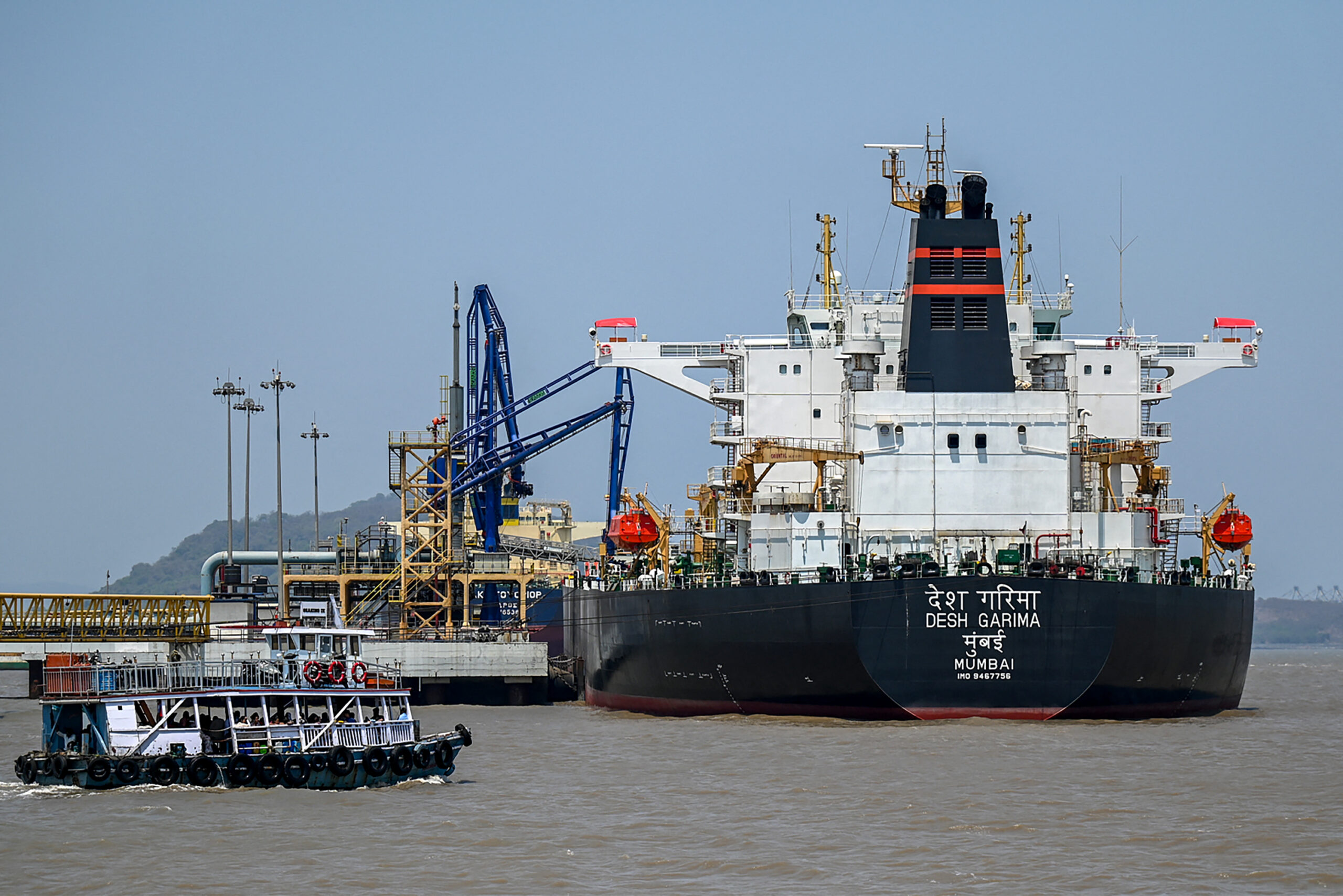
For India, the Indo-Pacific is not simply an eastward extension of its competition with China. Its western maritime geography is equally central to its security. India consumes roughly 5.5 million barrels of crude oil a day and, despite diversifying its suppliers to around 40 countries, it has a critical vulnerability in the Strait of Hormuz: Roughly 30 % of India’s crude imports currently pass through the waterway down from 45 % during 2024-2025.
Beyond crude oil, India relies on the Strait of Hormuz for over half of its LNG and nearly 90% of its LPG imports. Because LPG is critical to India’s household and commercial sectors, any disruption poses an immediate domestic threat. Supplier diversification cannot bypass this geographic reality. For New Delhi, keeping Hormuz open is not just a Middle Eastern concern, but the strategic linchpin connecting Gulf stability to India’s wider Indo-Pacific maritime interests.
The region is also central to India’s wider economic security. In FY 2024-25, trade with Gulf Cooperation Council (GCC) countries reached $178.56 billion, accounting for 15.42% of India’s global trade. The GCC is also a significant source of foreign investment, with more than $31 billion in cumulative investment as of September 2025. Close to 10 million Indians reside and work across the GCC, and remittances from the community accounted for almost 38% of India’s total remittance receipts in FY 2024-25, worth $52.44 billion. Much of this commercial activity depends on maritime routes through the Arabian Sea and western Indian Ocean, alongside the ports and infrastructure connecting India with its Gulf partners.
Disruptions surrounding the Strait of Hormuz have demonstrated this vulnerability. Despite diversifying its oil suppliers to include Russia, the United States, and other non-GCC producers – increasing its share of crude arriving through alternative maritime routes to around 70% – India’s exposure to the Middle East energy shock has been costly. The Hormuz crisis is estimated to have added $22 billion to India’s fossil-fuel import costs, while the broader economic impact extends to higher freight rates, war-risk insurance premiums, and other supply-chain disruptions. The estimate also excludes the costs associated with pipeline gas, coal, fuel oil, and naphtha.
Different Strategic Visions, Shared Interests
PACOM’s immediate strategic priorities demonstrate the difference in emphasis. Taiwan has become the most acute potential flashpoint in U.S.-China competition, with PACOM commander Adm. Samuel Paparo recently warning that China is manufacturing more than 800 missiles annually and citing Beijing’s 2027 military readiness target as a benchmark for strengthening U.S. bases, capabilities, and deterrence across the Pacific. Taiwan’s defense minister has similarly described the island as occupying a critical position in the first island chain and pointed to expanding cooperation with PACOM to strengthen its defense readiness.
India’s Indo-Pacific strategy is shaped by the same challenge, but not by the same immediate geography. New Delhi’s engagement with Taiwan has moved beyond diplomatic management toward economic and technological cooperation. Semiconductors, advanced manufacturing, artificial intelligence, cybersecurity, and supply-chain resilience have become important areas of engagement. These ties reflect India’s efforts to reduce strategic dependencies and strengthen its technological and economic resilience, rather than an alignment with U.S. planning for a Taiwan contingency.
Yet India does not view its regional role primarily through the lens of a Taiwan contingency or the first island chain. With China spending $314 billion on defense in 2024, nearly 3.6 times India’s $86 billion, New Delhi’s strategic environment extends eastward toward China and equally westward toward the Arabian Sea, the Gulf, and the wider Middle East.
The convergence is already visible across both the maritime and economic domains. The United States and India have steadily expanded naval interoperability through the Logistics Exchange Memorandum of Agreement, which provides reciprocal access to military facilities for refueling and support, and through exercises such as Malabar, where the two navies operate alongside Japan and Australia in increasingly complex maritime operations. Their cooperation has also expanded into maritime domain awareness, including information-sharing and efforts to improve underwater domain awareness across the Indian Ocean.
The economic side of this convergence is visible in the India-Middle East-Europe Economic Corridor (IMEC), launched at the 2023 G20 Summit by India, the United States, the EU, Saudi Arabia, and the UAE. Spanning roughly 6,400 kilometers (almost 4,000 miles), IMEC is designed to connect India’s western ports with the Arabian Gulf and onward to Europe through a combination of maritime, rail, digital, and energy infrastructure. Its rationale extends beyond trade: The corridor is intended to diversify supply chains and reduce exposure to maritime chokepoints, while the United States has viewed it as an alternative to the Belt and Road Initiative, emphasizing security, investment, and resilient supply chains. For India, IMEC provides a mechanism through which its western maritime geography can intersect with the U.S. Indo-Pacific emphasis on connectivity, resilience, and limiting China’s ability to shape regional economic networks.
The United States has an opportunity to translate this existing convergence into a clearer strategic alignment. Rather than measuring India’s relevance primarily by what it can contribute to a potential Taiwan conflict, Washington and New Delhi can build on their maritime cooperation and initiatives such as IMEC to connect U.S. priorities in the Pacific with India’s ability to shape security, connectivity, and resilience across the Indian Ocean and its western approaches.
The Quad: Political Uncertainty, Practical Cooperation
The political trajectory of U.S.-India cooperation is uncertain. The U.S.’s November 2025 National Security Strategy continued to support cooperation within the Quadrilateral Security Dialogue (Quad), a strategic grouping that includes India, the U.S., Japan, and Australia, but the absence of a leaders’ summit in 2025 raised questions about the grouping’s political weight in Washington’s Asia strategy. At the Quad’s May 2026 foreign ministers’ meeting, Indian officials pushed back against the idea that U.S. engagement had weakened, pointing instead to continued ministerial and working-level activity.
That activity remains substantial. The May meeting was the 11th Quad Foreign Ministers’ Meeting and the third in 18 months. The ministers also launched the Quad Indo-Pacific Logistics Network, initially focused on the Indian Ocean, alongside initiatives on critical minerals and energy security. This builds on the Quad’s established role as a mechanism for coordinating U.S. and Indian approaches to the Indo-Pacific.
For India, the significance lies in where this cooperation is moving. The Quad’s Indian Ocean focus builds on a longer U.S.-India convergence: Their 2015 Joint Strategic Vision explicitly linked the Asia-Pacific and Indian Ocean regions, while subsequent U.S. strategy documents expanded cooperation with India across the region, including from South Asia to the Indian Ocean. The current emphasis on maritime surveillance, energy security, and resilient supply chains consequently fits an established pattern of cooperation rather than representing a new departure.
India’s Strategic Autonomy and Limits to Alignment
India’s growing cooperation with Washington does not mean that New Delhi is prepared to subordinate its Indo-Pacific strategy to U.S. priorities. This convergence has developed alongside India’s commitment to strategic autonomy and not a formal alliance.
Chabahar indicates where India’s autonomy matters. India has been involved in developing the Iranian port since 2003 and signed a 10-year agreement in 2024 to operate its Shahid Beheshti terminal. Even after a U.S. sanctions waiver expired in April, exposing Indian entities involved in Chabahar to potential penalties, New Delhi held discussions with both Washington and Tehran over its continued investment in the port and sought a way to remain involved. India’s approach is one of alignment without exclusivity: It can deepen strategic cooperation with Washington across the Indo-Pacific while preserving westward interests that require engagement with Iran.
Beyond Nomenclature: A Shared Strategic Geography
The return to PACOM does not change the geography that made the Indo-Pacific strategically important. The Pacific, Indian Ocean, Arabian Sea, and Gulf remain connected by the same sea lanes, supply chains, and security challenges. Removing “Indo” from the command’s name does not make those connections disappear.
The question, then, is not whether India should adopt Washington’s Pacific priorities or whether the United States should embrace India’s broader strategic vision. It is whether the two can turn their overlapping interests into a more complementary approach. As Washington grapples with Chinese competition while confronting continuing instability in the Middle East, India can demonstrate how its interests and capabilities across the Indian Ocean and its western approaches strengthen the wider strategic balance.
India’s strategic relevance will depend on whether Washington and New Delhi can turn that geography into practical alignment.
The views expressed in this article are those of the authors and not an official policy or position of the Middle East Policy Council.
PICTURE | Desh Garima, an Indian-flagged tanker carrying crude oil that transited through the Strait of Hormuz, is seen docked at an offloading terminal along the coast in Mumbai on April 30, 2026. (Photo by Punit PARANJPE / AFP via Getty Images)