

Executive Summary
For years, U.S. policy toward Iraq’s Iran-backed armed factions, known in Iraq by the Arabic fasail, has largely been framed as a security problem. This approach is disconnected from the greater challenge the United States faces in Iraq.
Particularly since the 2018 parliamentary elections, with Iran’s support, the fasail have effectively pursued multipronged, long-term state capture, extending their influence across Iraq’s political institutions, security sector, bureaucracy, economy, and governance. This advances Iran’s strategy of preventing the reemergence of a hostile Iraqi state while leveraging Iraq for wider regional influence.
The fasail constitute a multi-domain influence network operating simultaneously inside and outside the Iraqi state. Militarily, they form the core pillars of the state-funded Popular Mobilization Forces while participating in Iran’s regional “Axis of Resistance” (Mihwar al-Muqawama; Mehvar-e Moqavemat). Politically, fasail-linked groups won around 80 of parliament’s 329 seats in 2025, while their influence extends across ministries, provincial governments, bureaucratic appointments, and economic networks.
Disarmament or integration risks addressing only the armed manifestation of this network while leaving its broader infrastructure intact and granting the fasail greater institutional legitimacy. U.S. policy therefore requires a whole-of-the-state approach targeting the political coalitions, institutional enablers, economic networks, and bureaucratic structures that collectively sustain fasail and Iranian influence inside Iraq.
The content and views expressed in this paper are those of the authors and should not be taken to reflect an official policy or position of the Middle East Policy Council.
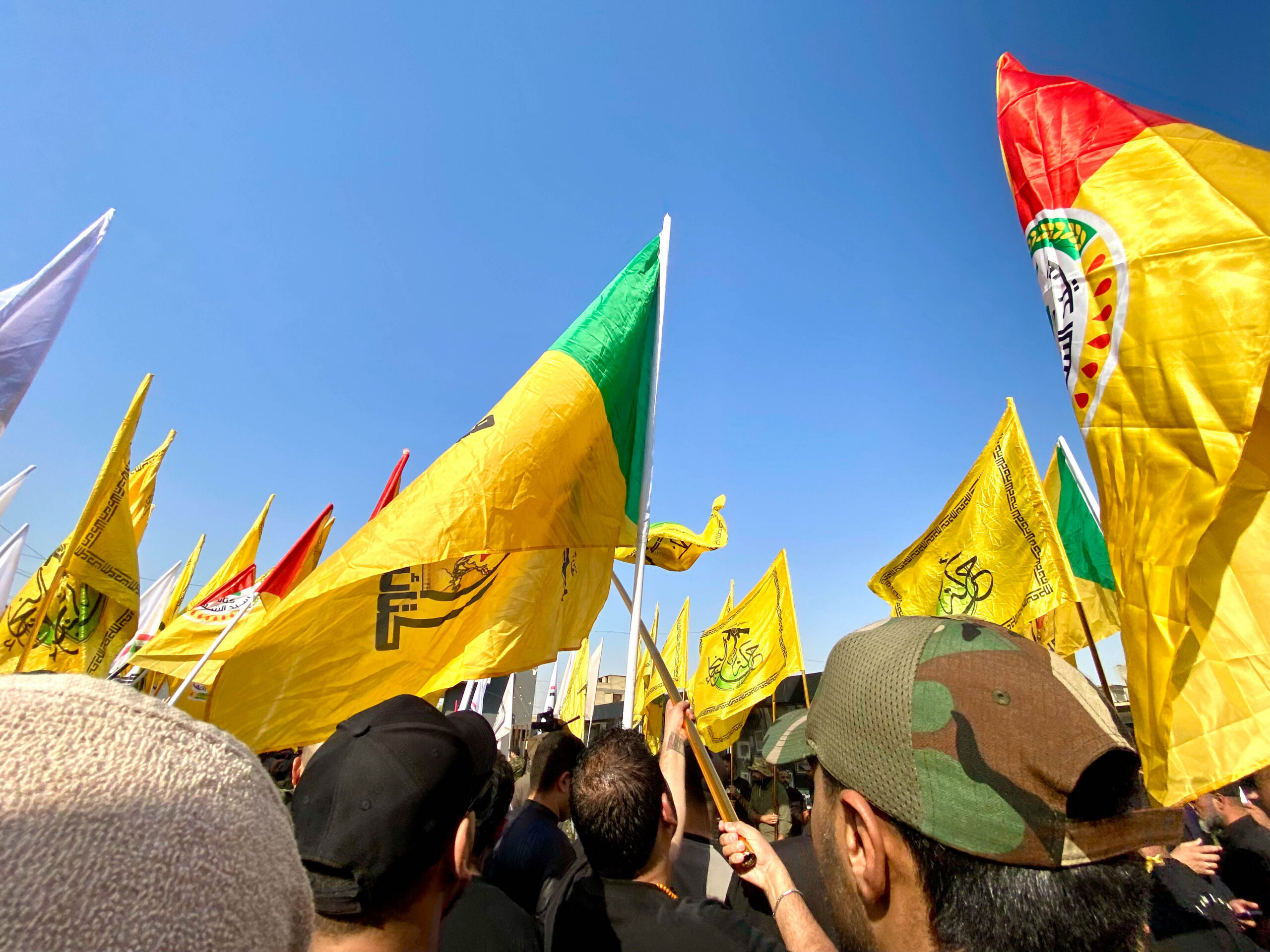
Photo | A funeral procession for members of the Popular Mobilization Forces (PMF) killed in airstrikes targeting the group’s headquarters in Baghdad, Iraq, on Wednesday, July 29, 2026. (Photo by Muntazer Uday Sahib/NurPhoto via Getty Images)