


Executive Summary
The three case studies below show four forms of the same dynamic.
• In Syria, exclusion is the product of a centralizing new order that has refused to share power with outsiders (including the Druze) and uses force when negotiations stall.
• The extreme violence perpetrated against the Druze in Syria in July 2025, in turn, reinforced exclusionary authoritarians on the Druze side.
• In Iraq, exclusion comes from an entrenched political class that has captured formal democratic institutions and uses them to block challengers.
• In Lebanon, exclusion is also structural but stems from a different ill: An armed nonstate actor has hollowed out the state and politically marginalized another sect.
The mechanisms differ, but all impose a strategic cost on the United States and the people of the Middle East. All have displaced people, undermined partner forces, facilitated Iranian intervention, and fostered conditions for extremism.
This problem set calls for policies that condition aid and support on inclusionary policies and a robust reporting mechanism from the U.S. Department of State to Congress produced using clear metrics for resilience, security conditions, participation, integration, and flourishing.
The content and views expressed in this paper are those of the authors and should not be taken to reflect an official policy or position of the Middle East Policy Council.
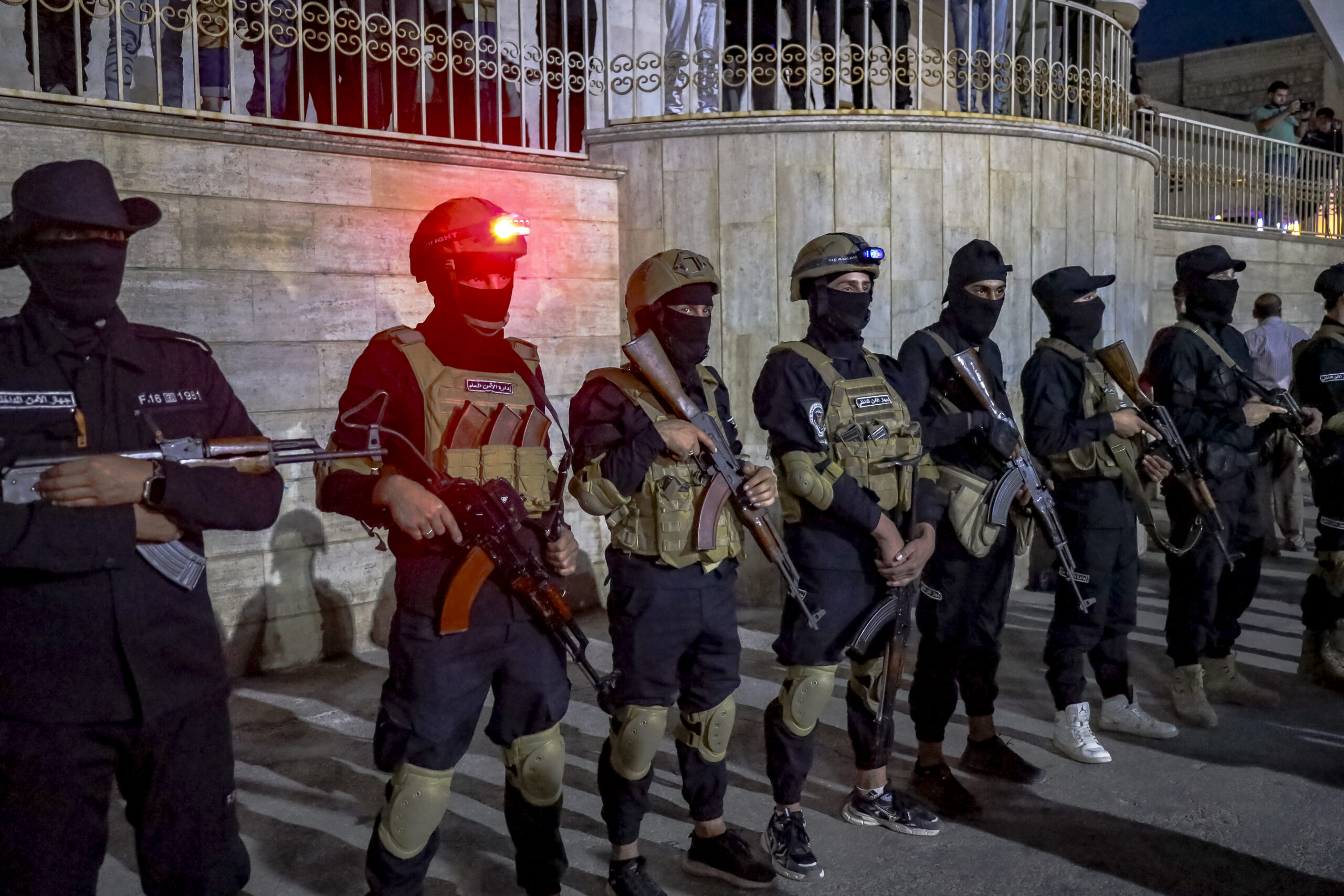
PHOTO | Masked and armed Syrian security personnel are on the scene as people gather in Idlib, Syria, on July 16, 2025 to voice their support for the operations by the new Syrian government and its forces in Suwayda. (Photo by Omar Albaw / Middle East Images via AFP) (Photo by OMAR ALBAW/Middle East Images/AFP via Getty Images)