

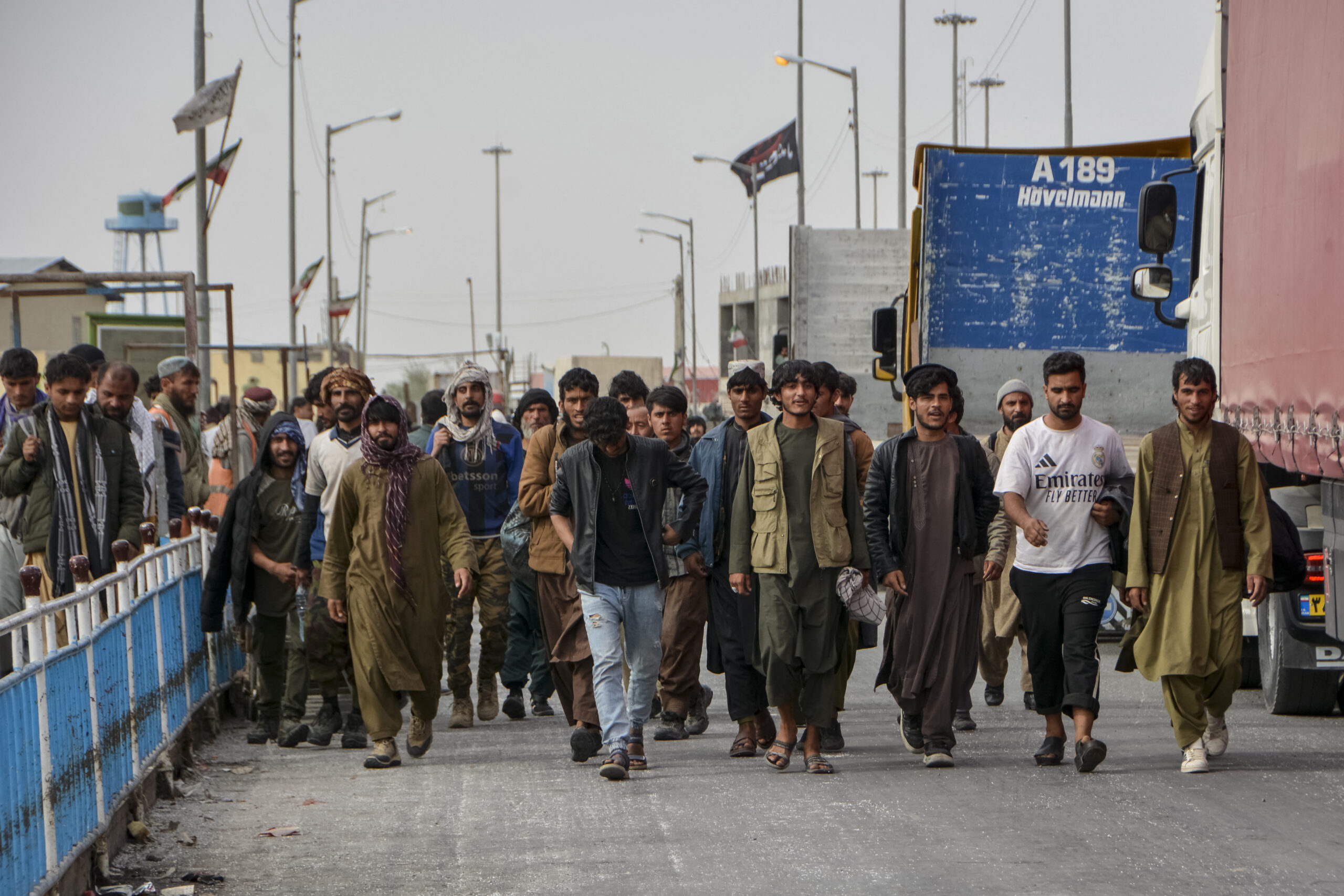

The recent large-scale wave of anti-regime unrest unfolding in Iran, compounded by the ongoing major assault by the United States and Israel, carries strong geopolitical implications for Afghanistan, given the deep security, economic, and demographic links between the two countries. As a critical trade and transit artery, host to millions of Afghan refugees and labor migrants, and an important regional interlocutor for the Taliban, instability in Iran directly affects Afghanistan’s internal fragility. The consequences of Iran’s crisis on Afghanistan are best understood through two connected layers: first, the political and security implications for the Taliban and how they view Iran’s unrest as a real-time example of how an authoritarian system responds to internal pressure in order to survive; and second, the growing vulnerability of Afghan civilians both inside Afghanistan and among refugee communities in Iran.
While Iran’s future trajectory remains uncertain, plausible scenarios, from continued survival through repression to prolonged instability and political transformation or regime change, all risk increasing pressure on Afghanistan through disrupted trade, tighter Taliban control, and intensified crackdowns on refugees. For the United States and its partners, recognizing this linkage is essential for developing realistic and shock-absorbing policy given the limited on-the-ground leverage and ongoing counterterrorism objectives in Afghanistan.
The unrest, widely described as the largest since the 1979 revolution, initially emerged from economic frustration, including inflation, currency decline, and rising food prices. Similar to the previous protest cycles, demonstrations that began in Tehran in late December 2025 quickly spread to other major cities and moved beyond economic grievances to regime-change slogans. Public statements by U.S. President Donald Trump and exiled opposition figure Reza Pahlavi, the son of Iran’s last shah, further intensified the protests. Iranian authorities, labeling the protesters as “terrorist elements,” framed the unrest as a national security threat backed by foreign powers and launched a severe crackdown. While the Iranian government reported just over 3,000 deaths during the unrest, international media reported significantly higher, albeit unverified, estimates ranging from over 5,000 to more than 33,000. Exact numbers remain difficult to verify due to a nationwide internet shutdown.
The crisis has since been compounded by the ongoing war. Beginning late February 2026, the U.S. and Israel launched major air and missile strikes targeting Iranian military infrastructure and senior leadership compounds in Tehran and other strategic locations. The attacks resulted in the decapitation of Iran’s senior leadership, including the killing of Supreme Leader Ayatollah Ali Khamenei along with several other senior political and military figures. The escalation and Iran’s retaliatory missile and drone attacks have transformed Iran’s internal crisis into a wider regional crisis, increasing uncertainty across the Middle East and raising the risk of political, economic, and humanitarian spillovers for neighboring states. For countries with deep economic and demographic ties to Iran, particularly Afghanistan, the consequences of this instability are already beginning to take shape.
For Afghanistan, the specific political outcome of Iran’s unrest matters less than the fact that prolonged instability itself produces spillover effects. Iran is not only a neighbor but also a critical economic artery and, since 2021, a key regional interlocutor for the Taliban. It hosts millions of Afghan refugees and migrant workers, supplies a large share of Afghanistan’s consumer goods, and functions as one of the country’s most reliable transit routes, particularly as relations between Afghanistan and Pakistan remain tense and have escalated into an “open war” with cross-border military strikes targeting Taliban military positions. Disruption inside Iran, therefore, causes direct pressure on Afghan livelihoods, markets, refugees, and security conditions.
Political and Security Consequences
Iran’s unrest has direct political and security implications for the Taliban. While Tehran has not formally recognized the Taliban regime, it has maintained diplomatic ties and has been one of the Taliban’s most important regional interlocutors since 2021. Despite ideological differences, historical hostility, and periodic border and water skirmishes, the relationship has been pragmatic, especially on management of its 900-kilometer shared border, water issues, refugees and returnees, and trade and security cooperation. Mutual hostility toward the United States has led to strengthened relations between Iran and the Taliban prior to 2021, including arms support to the Taliban, and those ties have expanded since the Taliban’s return to power.
Iran was among the first countries to transfer operational control of Afghan embassy and consulates to Taliban-appointed officials in 2022, and as recently as February of this year, the Iranian Ambassador to Afghanistan publicly indicated that discussions over formal recognition are ongoing. If such recognition proceeds, Iran would become the second country after Russia to formally recognize the Taliban government. Prolonged instability in Iran, or a significant political shift there, would therefore alter an important external pillar of Taliban rule.
In the event of a weakened Iranian state or regime change, the Taliban would lose a key regional partner. A future government in Tehran, particularly a democratic or one supported by the United States and the West, would likely reassess relations with the Taliban. Diplomatic representation, border cooperation, and economic engagement could all come under review, including potential closure of the Afghan Embassy or consulates that are currently represented by the Taliban. Such changes would significantly increase uncertainty along Afghanistan’s western frontier and place additional burdens, including economic and security expenditures, on the Taliban.
A major political breakdown or regime change could also lead some hardliner figures or armed elements to seek sanctuary outside Iran. Given the Taliban’s past record of hosting external militant actors, there is a risk that Afghanistan could become a sanctuary for such individuals. Since the Taliban’s return to power, over 23 terrorist groups, including al-Qaida and Tehrik-i-Taliban Pakistan, have been reported to operate within Afghanistan. An influx of additional actors from Iran would create another layer of cross-border tension, this time along the Afghanistan-Iran frontier, in addition to the already volatile situation along the border with Pakistan. Such developments may not necessarily reflect a deliberate Taliban policy, but it would add further pressure to border management and regional security.
Beyond bilateral relations, political changes in Iran would also affect domestic politics in Afghanistan. For decades, several major political parties, both Shia and non-Shia, including Hezb-e-Wahdat Islami, Hezb-e-Harakat Isalmi, Hezb-e-Jamiat Islami, Hezb-e-Islami, and Tanzim-e-Dawat Islami, have maintained close ties with Tehran. A disruption of these networks would remove established channels of influence and mediation, increasing political ambiguity. There is also a risk of expulsion of these political figures and/or their affiliates, who escaped Taliban rule and have lived in Iran since the collapse of the Afghan government in August 2021, back to Afghanistan.
Implications for the Taliban’s Governance Choices
In addition to its immediate political and security consequences, Iran’s unrest has implications for the Taliban’s governing choices and how the movement thinks about its own political survival. For the Taliban, with relatively limited resources and no broad political inclusion, developments next door serve as a reminder of vulnerability and are difficult to ignore. Taliban restrictions on coverage of Iran’s protests, documented by UNAMA and Afghan media watchdogs, indicate their sensitivity to the political visibility of unrest beyond Afghanistan’s borders. Similarly, Taliban spokesperson Zabihullah Mujahid’s recent statement that Afghans would be prepared to cooperate with the Iranian people if the United States were to attack Iran, along with more recent Taliban foreign ministry warnings that the ongoing war could have “long-term negative consequences” for the region, may also reflect the Taliban’s own sense of vulnerability, rather than solidarity.
Although there is no direct visibility into internal Taliban deliberations, the author’s conversations with people familiar with internal Taliban dynamics, including Afghan political and security analysts, former republic senior officials, former civil society activists based in Afghanistan, and journalists, combined with observable patterns of Taliban governance since 2021, suggest that the Taliban view Iran’s unrest primarily through the lens of regime survival rather than reform. They do not view the protests as a political and ideological challenge. Instead, the movement views protest as an example of how an authoritarian state under serious domestic pressure stays in power.
Iran’s response to the unrest, including using multiple divisions and layers of its security apparatus to work together to suppress the unrest, its tight restriction on internet access and flow of information and exploiting social divisions, reflects a common strategy to authoritarian systems. The Taliban already use many of these tools in their own governing style. However, what stands out in Iran’s case is the scale and intensity of the crackdown, including efforts to block alternative communication channels such as satellite-based services like Starlink.
Similarly, Iran’s experience is likely to reinforce the Taliban’s existing belief that political survival does not require broad concessions. While Tehran reportedly made limited economic concessions, the fact that the Iranian regime has thus far endured despite widespread unrest and sustained pressure, is viewed by hardliners as evidence that force, repression, surveillance, and control can manage discontent over time. This could further deepen the Taliban’s reluctance to engage in meaningful political outreach, power sharing, or the formation of an inclusive government as a response to public dissatisfaction.
Crackdown on Afghan Refugees in Iran
The most immediate and severe consequences, however, would fall not on political actors but on ordinary Afghans, particularly those living in Iran. The country hosts more than 4 million Afghan refugees and migrant laborers who represent one of the largest and most vulnerable populations exposed to Iran’s crisis. In the past, periods of economic challenges or political unrest inside Iran have led to intensified xenophobia, discrimination, and harsher treatment of migrants, including deportation, detention, employment restrictions, and even executions. Just recently, following the 12-day war with Israel, Afghan refugees have reported raids, arrests, mass deportations, and accusations of collaboration with foreign countries, often in the absence of credible evidence.
Recent conditions following the major anti-regime protests show that this pattern is repeating. Even without regime change, the economic challenge of instability is already decreasing employment opportunities for Afghan workers. At the same time, security-focused narratives make them convenient targets for enforcement measures. Under any of the three plausible scenarios, including continued repression, prolonged instability under a weakened regime, or regime change, pressure on Afghan migrants is likely to increase.
Forced returns pose particular risks. Many Afghans in Iran include former members of Afghanistan’s security forces, journalists, civil society activists, and individuals with known opposition to Taliban rule. Their deportation into Taliban-controlled Afghanistan would expose them to detention, retaliation, and disappearance.
Trade Disruptions and Afghanistan’s Economic Exposure
Inside Afghanistan, the economic consequences would be equally serious. Iran is one of the largest trade partners for Afghanistan. Official statistics show that Iran accounts for 25 percent of Afghanistan’s import market. The country has become even more dependent on Iranian goods, especially as trade routes with Pakistan, which accounts for 40% of Afghanistan’s import market, remain closed as a result of recent political and security clashes and ongoing Pakistani military strikes. Any disruption in Iranian exports to Afghanistan, even temporary, could increase prices of food, fuel, and basic goods. Given the already limited purchasing power of Afghan households, even modest price increases would severely affect ordinary Afghans.
Early signs of disruption are already visible. Local reporting from western Afghanistan indicates rising prices for basic goods following the strikes on Iran, while Afghan traders have warned that fuel imports and commercial shipments from Iran have slowed amid uncertainty and security concerns.
At the same time, any disruption in trade with Iran would affect Taliban revenues collected at border crossings, which form a significant portion of state income. Based on recent revenue patterns, the Taliban would likely offset these shortfalls not through reform but through increasing fees, taxes, administrative collections, and Ushur and Zakaat, placing further economic hardship on the public, which would undermine the current fragile stability.
Recommendations
While Iran’s future path remains uncertain, the combination of internal unrest and active military confrontation increases the likelihood that instability in Iran will persist. The most likely outcome in the near term will be a period of prolonged instability managed through repression that weakens the regime’s power. Such a scenario would keep Afghanistan in a state of consistent exposure to crackdown on migrants, economic vulnerability, and security uncertainty. Even more dramatic political change in Iran would not necessarily bring short-term positive change that many would expect. Transition periods require focus on internal consolidation and reduce a country’s capacity to manage its regional responsibilities. This creates spillover effects on neighboring countries, especially fragile ones like Afghanistan.
For policymakers in Washington, these dynamics underscore the need for a pragmatic approach that accounts for spillover effects. The consequences of Iran’s unrest, particularly for Afghanistan, carry economic, humanitarian, and stability implications and could affect the Taliban’s governance choices. This is especially important given the United States’ limited on-the-ground leverage in Afghanistan and its counterterrorism objectives there. Policymakers should also remain mindful that, given the Taliban’s past record of hosting militant actors, instability or transition in Iran could create conditions under which some hardline elements may seek sanctuary in Afghanistan.
In light of these risks, a more effective approach would prioritize protection mechanisms for Afghan refugees, support maintaining and creating alternative trade channels, and remain attentive to how regional instability shapes Taliban behavior. Iran’s crisis is unlikely to moderate Taliban rule; if anything, it likely reinforces the movement’s drive toward more control and coercion. Recognizing this reality is essential for avoiding policy assumptions disconnected from conditions on the ground.
The views expressed in this article are those of the authors and not an official policy or position of the Middle East Policy Council.